"The whole village has been erased," says Mukhtiar Ahmed, standing among Panjal Sheikh's muck and rubble. In August 2022, relentless monsoon floods swept his village in southern Pakistan, displacing tens of millions and wiping out entire farms overnight. Similar sentiments echo across the border where Vijay Jawandhia, a 77-year-old farmer in western Maharashtra, standing amid his parched fields, laments, "Either it rains too much within a short time or it doesn't rain at all." Across South Asia, weather patterns are becoming more extreme and unpredictable.
 |
| Illustration by Ajitesh Vishwanath |
A Shared Climate, A Shared Crisis: South Asia's Ecological Interdependence
The ecological fabric of South Asia is intricately knit together, influenced by common weather patterns, river basins, and topography throughout several nations. The region's water tower, the Himalayas, span across China, India, Nepal, and Bhutan. Vital rivers like the Ganga, Brahmaputra, and Indus are nourished by their glaciers and provide more than a billion people with electricity, irrigation, and drinking water. However, the melting of glaciers is being accelerated by climate change. Under high-emission scenarios, the ICIMOD HI-WISE assessment of 2023 cautions that glacier melt in the Hindu Kush Himalaya might remove 70–80% of the glacier volume by 2100.
Similarly, the monsoon season in South Asia is significantly influenced by the Bay of Bengal. Life-sustaining rains are brought to Bangladesh, Nepal, Sri Lanka, and India by moisture-laden winds that rise above the Indo-Gangetic plains. But monsoons are growing unpredictable, with more frequent droughts and heavy rains causing cross-border floods.
This interconnectedness is further demonstrated by the river systems in the area. The Teesta is shared by Sikkim, West Bengal, and Bangladesh; the Ganga flows from India into Bangladesh; and the Brahmaputra, which originates in Tibet, passes through both India and Bangladesh. The unpredictable river flows, monsoon fluctuation, and glacier retreats travel freely across national boundaries, uniting the area in a sense of urgency and vulnerability.
Bangladesh is among the nations most at risk from sea level rise. Projections indicate that up to 17% of its land may be under water by the middle of the century, forcing more than 20 million people to flee their homes due to climate change. During the 2022 monsoons, one-third of Pakistan was flooded, impacting 33 million people, displacing 8 million, and damaging over 2 million homes. Economic losses exceeded $40 billion, overwhelming national disaster systems.
Lakes formed by Himalayan glaciers are becoming unstable due to rising temperatures, and they have the potential to explode catastrophically downstream. Nepal is home to more than 300 such glacial lakes, several of which are considered hazardous because of GLOFs, that can sweep away settlements in minutes. Glaciers in Bhutan's Punakha and Chamkhar valleys are receding at the rate of 30 to 60 meters per decade.
Small and coastal economies, such as Sri Lanka and the Maldives, are also facing climate-related financial crises. In 2022, extreme weather events and the pandemic caused the tourism income to plunge, exacerbating macroeconomic vulnerabilities and causing Sri Lanka to default. Equally vulnerable is the Maldives, whose economy is strongly dependent on tourism and endangered marine ecosystems, all the while when it is beset with unsustainable debt.
The Climate Cost of Ambition: India, China and the Limits of Power
In a region shaped by dynamism, the climate challenge is looming as a major destabilizer. Both India and China, global powerhouses, are finding their growth hindered not just by geopolitical rivalry but also by environmental fragility. In India, monsoon volatility undermines agricultural stability, water shortages worsen regional tensions, and excessive heat reduces industrial productivity, all of which directly undermine the country's goal of becoming a $5 trillion economy and a global manufacturing hub. China faces similar domestic problems; melting Himalayan glaciers threaten water supplies into Tibet, Yunnan, and Xinjiang, all of which are critical to its Belt and Road Initiative.
Climate change, however, resists containment, in contrast to a conventional security threat. Glacial melt from Tibet causes flooding in Assam. Rising sea levels in Bangladesh raise migration pressures on India's borders. Cyclones in the Bay of Bengal disrupt trade and communication on China's Maritime Silk Road.
Both nations are making major investments in infrastructure and climate adaptation, but collaboration is limited. As South Asia's ecology deteriorates, strategic goals are pushed to accommodate ecological restrictions. Without climate coordination in areas such as water governance, migration, and disaster management, even "superpower" ambitions would be vulnerable to the silent fury of rising temperatures and shifting tides.
The Way Forward: A South Asian Green Peace Deal
In order to break the downward spiral of rivalry and responsibility, South Asia requires a Green Peace Deal — a common climate security agreement that values collaboration over competition. This agreement may start with cooperative climate risk mapping, monsoon data sharing, and a transboundary disaster response system through SAARC or BIMSTEC. India may take the lead by promoting a Himalayan Climate Observatory Network, which could monitor glaciers, GLOFs, and cross-border water flows. The establishment of a South Asian Green Corridor, which connects solar and wind systems from Rajasthan to the Maldives, has the potential to reduce collective fossil reliance while strengthening economic relations. Importantly, the agreement must incorporate climate-smart border protocols that address internal displacement with dignity and regional support. Geography must make us allies, not just neighbours.
About the Author: Nayanika Karan
A graduate in Geography from Miranda House, University of Delhi, Nayanika has previously worked with the North-East Regional, Research & Resource Center, where she focused on ecological governance and regional policy analysis. Her research interests lie at the intersection of geopolitics, sustainability, and institutional change, with an emphasis on climate resilience, development policy, and spatial analysis.
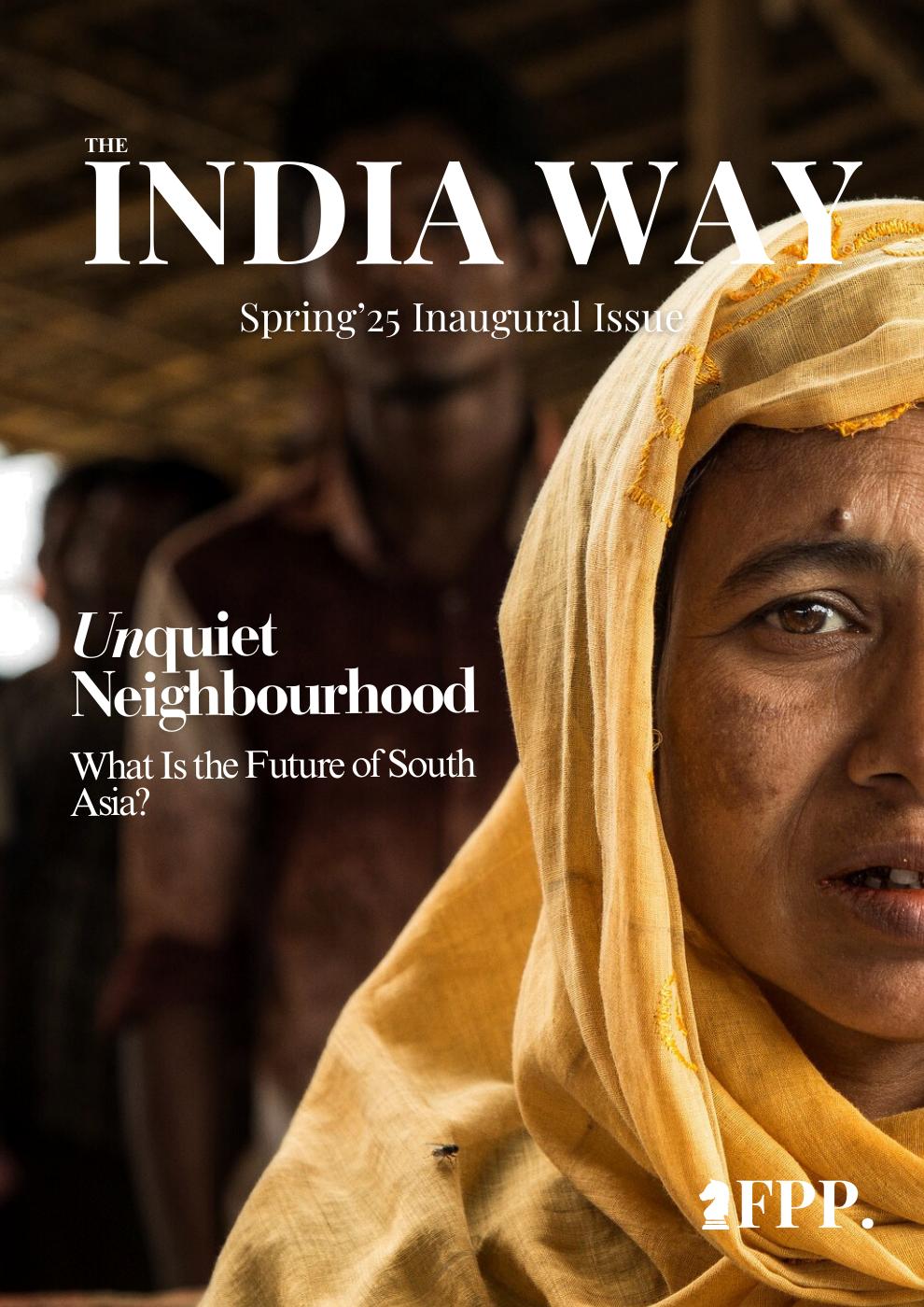
Read Unquiet Neighbourhood: What is the Future of South Asia