In a region fraught with political uncertainties, conflict-ridden past and ideological divides, stories of love and kinship bonds across the Indo-Pak border often pose as strong counter-narratives. Yet, emotions, however earnest, cannot always bridge existential divides. These divisions become evident in the aftermath of the April 22 civilian tragedy in the Baisaran meadow of Pahalgam, India, deepening schisms in Indo-Pak diplomatic relationships.

Partitioned Lands, Connected Lives
Much like the roots of a tree suffer the strain of the storm, the burden of geopolitical crisis, invariably, is borne by the masses. The Pahalgam terror attack, which claimed twenty-six lives, has etched yet another stain on Kashmir's troubled soil. Such disturbing instances, including the targeted killings of Hindu pilgrims in Jammu's Reasi district last year, highlight an alarming pattern of sectarian violence with a motive to destabilise the region and ruin the very essence of Kashmiriyat — an idea that resonates with the local populace and celebrates communal amity. This notion of a united India does not settle well with the Islamic Republic, long associated with state-sponsored and state-assisted acts of terrorism. This sentiment is vividly underscored by the provocative assertion of Pakistan's Chief of Army Staff General Munir, who went to the extent of calling Kashmir Pakistan's "jugular vein" — a rhetoric exemplifying securitisation of the territorial dispute.
In the drama that is unfolding, cross-border couples are caught between competing and proprietorial rival postures and attitudes of India and Pakistan. Despite decades of animosity between the two states and targeted religious violence, interstate marriages are not new to Indo-Pak relations. India and Pakistan were both once part of the same nation, sharing similar dialects, cuisines and even cultures. Hence, such instances of cross-border marriages are not new, especially in states that lie on international borders.
Such acts of violence and diplomatic fragility between the two nations are not mere headlines for couples in cross-border marriages but a cause of concern. Subsequent to the terror attack in Pahalgam, India was quick to respond with strict measures against Pakistan — it downgraded diplomatic ties, closed the Attari border, suspended the Indus Water Treaty, cancelled short-term visas for Pakistan nationals and asked them to leave in the next forty-eight hours. Thus, these incidents press for increased surveillance, suspending visas and fracturing fragile pathways of emotional and familial reunion. Cross-border relationships are eyed as security liabilities rather than legitimate relationships. Love letters are left unanswered — not by the beloved, but by the bureaucracy.
Cultural Bridges of Love
The partition of the Indian subcontinent and the subsequent creation of Pakistan are fraught with a troubled past. Families fractured. Homes were abandoned overnight. Brothers turned on brothers. Identities were redefined. Some members of families remained where they were by choice, and some were forced to relocate. However, their hearts still remain the same. Cross-border marriages are a way to keep this spirit of religious and cultural harmony alive. Most of these marriages within the Muslim community happen within the families, owing to the cultural acceptance of cousin marriages. Given that a significant presence of their extended families — such as maternal aunts and uncles — resides across the border, the orchestration of these marriages becomes relatively seamless. However, such instances of cross-border marriages among Hindus are rarely seen given their dwindling population in the Islamic Republic, owing to the theocratic state's extremist population.
Over time, such marriages have served as a personal and symbolic gesture of reconciliation, sustained through community ties, diaspora networks and mutual traditions. It is against this backdrop that policy instruments like the Long-Term Visa (LTV) were put in place to address the legal and humanitarian needs emerging from these cross-border marriage unions. The LTV was especially directed towards the minorities coming from Pakistan, Afghanistan and Bangladesh to India in the hope of permanent settlement in India to acquire Indian citizenship, also including Pakistan/Bangladesh women married to Indian nationals.
Another access for Pakistani nationals to cross to India is its world-class yet affordable health infrastructure, which draws medical tourists to India not only from South Asia but also from African and West Asian nations. India extends medical (Med Visa) and medical attendant (Med X Visa) visas to Pakistani nationals on compassionate grounds. Such humanitarian provisions also permit visa extensions for supplementary consultations, subsequent procedures and alternative medicines under India's indigenous AYUSH system. This legal grey area is often used by families in a desperate bid to facilitate meetings between prospective brides and grooms or to solemnise marriages — especially in cases where customary visa routes are inaccessible.
The power of digital reach and social media cannot be downplayed in such cases. There have been instances where frantic youngsters succumb to the pull of social media, crossing the border by all means or by finding loopholes within the system in the hope of meeting their beloved on the other side of the border. Virtual games like PUBG, a shared artistic taste or a cricket match — there are ample ways that can spark a connection. Most of the time, when traditional visas for weddings are denied, families perform online nikah — through video conferencing — to religiously solemnise the marriages.
Way Forward
While such unions do not come without complications — including long separation periods, hope to get citizenship, limited access to legal routes or visa denials — it is often believed that they come with a shared socio-cultural ethos of the subcontinent. Although these cases remain a securitisation threat and receive public scrutiny, politics often overlooks the fact that people-to-people connections hold more conviction than state narratives. In a region where even dialogues are volatile, the most simple yet transformative form of diplomacy is the one that begins with "I do."
About the Author: Shreya Nautiyal
A PhD scholar at the Centre for European Studies, Jawaharlal Nehru University, New Delhi. She holds degrees in Economics (University of Delhi) and International Relations and Area Studies (JNU). Her research explores security, governance, and multiculturalism in South Asia and Europe. She has worked with KIIPS and RIS on European affairs and Global North-South cooperation, and her publications reflect a multidisciplinary focus on security, sustainability, and geopolitics.
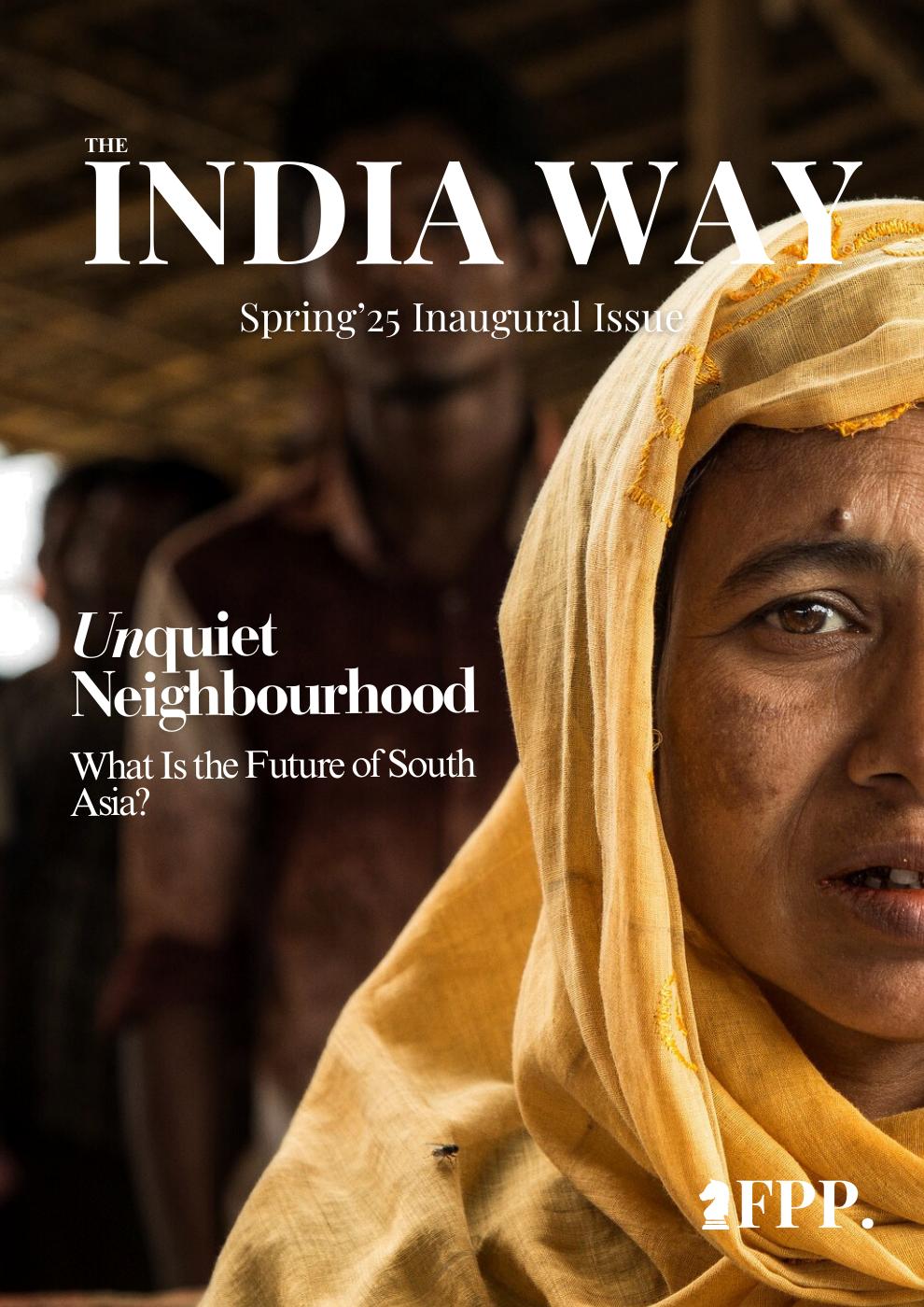
Read Unquiet Neighbourhood: What is the Future of South Asia?