"They were taken, blindfolded, crammed into cars, and driven off in the stillness of the night. By daybreak, they found themselves isolated from their families, communities, and homeland, stranded in a no-man's land." This isn't a dystopian novel scene. It is the reality of Assam in 2025.
The Assam government has stepped up its "push-back" policy in recent months, deporting hundreds of people who the state's Foreigners Tribunals deemed to be "foreigners." In secret operations, more than 300 people have been sent to Bangladesh since May alone, raising serious humanitarian and legal concerns. The lived experiences of those being expelled paint a far more disturbing picture, even though the state maintains that it is only carrying out the law.
 |
| Photo Credit: SAM PANTHAKY/AFP |
The Legal System: Weak and Broken
A seriously defective identification system lies at the core of Assam's push-back policy. Determining whether a person is Indian or not is the responsibility of Foreigners Tribunals, quasi-judicial organisations with broad authority. However, they function with little oversight, and the majority of those who precede them do not have access to sufficient documentation or legal counsel. Particularly for the poor and illiterate, the process is biased.
Worse, Assam has started using the 1950 Immigration (Expulsion from Assam) Act, a law from the colonial era, to completely circumvent the Tribunals. District officials now have the authority to expel people without a hearing thanks to this antiquated clause. According to Article 21 of the Indian Constitution, this deprives citizens of their constitutional right to due process. In the name of national security, such executive overreach not only threatens to uproot Indian citizens but also erodes the rule of law.
Deportation and Detention: A Humanitarian Emergency
Assamese detention facilities, like the enormous building in Matia, Goalpara, have come to represent hopelessness. Originally intended as short-term holding facilities, they are now used as long-term prisons, frequently with little information regarding the inmates' legal status. Families are split up. Parents and children are kept apart. Abuse and unhygienic conditions have been reported by female detainees. This suffering is exacerbated by the recent deportations, which leave detainees stranded across the border, frequently with no means of returning or even proving their identity.
India's responsibilities under international humanitarian law are flagrantly violated by these acts. Even though India is not a signatory to the 1951 Refugee Convention, the principle of non-refoulement — which forbids sending people back to a nation where they face grave risks to their lives or their freedom — is a fundamental component of customary international law. It is not only inhumane but also illegal to deport people in this way without even verifying their acceptance in the new nation.
A Design That Discriminates?
Although many people are impacted by the push-back policy, a closer examination shows a worrying trend. Muslims of Bengali descent make up the great majority of those who have been declared foreigners. The demographic gap is difficult to overlook, even in light of the government's claims that religion has no bearing. This is particularly true when considering the Citizenship Amendment Act (CAA), which grants non-Muslim immigrants the only route to citizenship. By establishing a risky precedent in which citizenship enforcement seems to be impacted by religion, this threatens India's secular fabric and the equal protection guarantees outlined in Article 14 of the Constitution.
The Courts' Voice and the State's Silence
Family members of deported people, some of whom are still untraceable, have filed numerous habeas corpus petitions in the Gauhati High Court. The legality and constitutionality of the push-back policy have also been contested in a Public Interest Litigation (PIL) that has made it all the way to the Supreme Court. These legal actions bring to light the fear of wrongful expulsion that consumes thousands of people.
The deportations' aggressiveness and lack of transparency have even drawn criticism from the judiciary. However, the state is still defending its actions by saying that only people who have been legally declared foreigners are being expelled. However, as legal experts note, such guarantees are meaningless in the absence of procedural protections.
A Call to Action & Moving Toward a Humane Policy
The story of Khairul Islam, a former government employee who was abruptly labeled a foreigner and forced to cross the border again, lies at the heart of this developing tragedy. He had yet to file an appeal. His family looked on helplessly as he was taken away and pushed into "No Man's Land." His story serves as a chilling reminder of the system's shortcomings and the human cost of state indifference, even though he was eventually permitted to return.
We still have time to make amends for these wrongs. Assam needs to stop its push-back policy right away and make sure that no one is sent abroad before being given a fair and thorough hearing. Independent oversight should be applied to detention facilities, and they should be converted into humane establishments with transparent resolution schedules. Everyone involved in tribunal proceedings must have access to legal aid. The state must, above all, make sure that its policies do not single out communities based on their ethnicity or religion.
Citizenship is a promise of belonging, not just a piece of paper. We all lose a piece of our shared humanity when that promise is broken and people are viewed as expendable. Assam needs to reconsider its course, not just in line with the Constitution but also with empathy and morality.
About the Author: Sreejayaa Rajguru
A final-year LL.B. (Hons.) student at Amity University and a Philosophy graduate from Hindu College, Rajguru focuses on human rights law, constitutional interpretation, and gender justice. She has interned with the Supreme Court of India, the Assam Human Rights Commission, and leading law firms. A published writer with bylines in The Leaflet, India Today NE, and The Wire, she is committed to advancing access to justice, particularly in Northeast India.
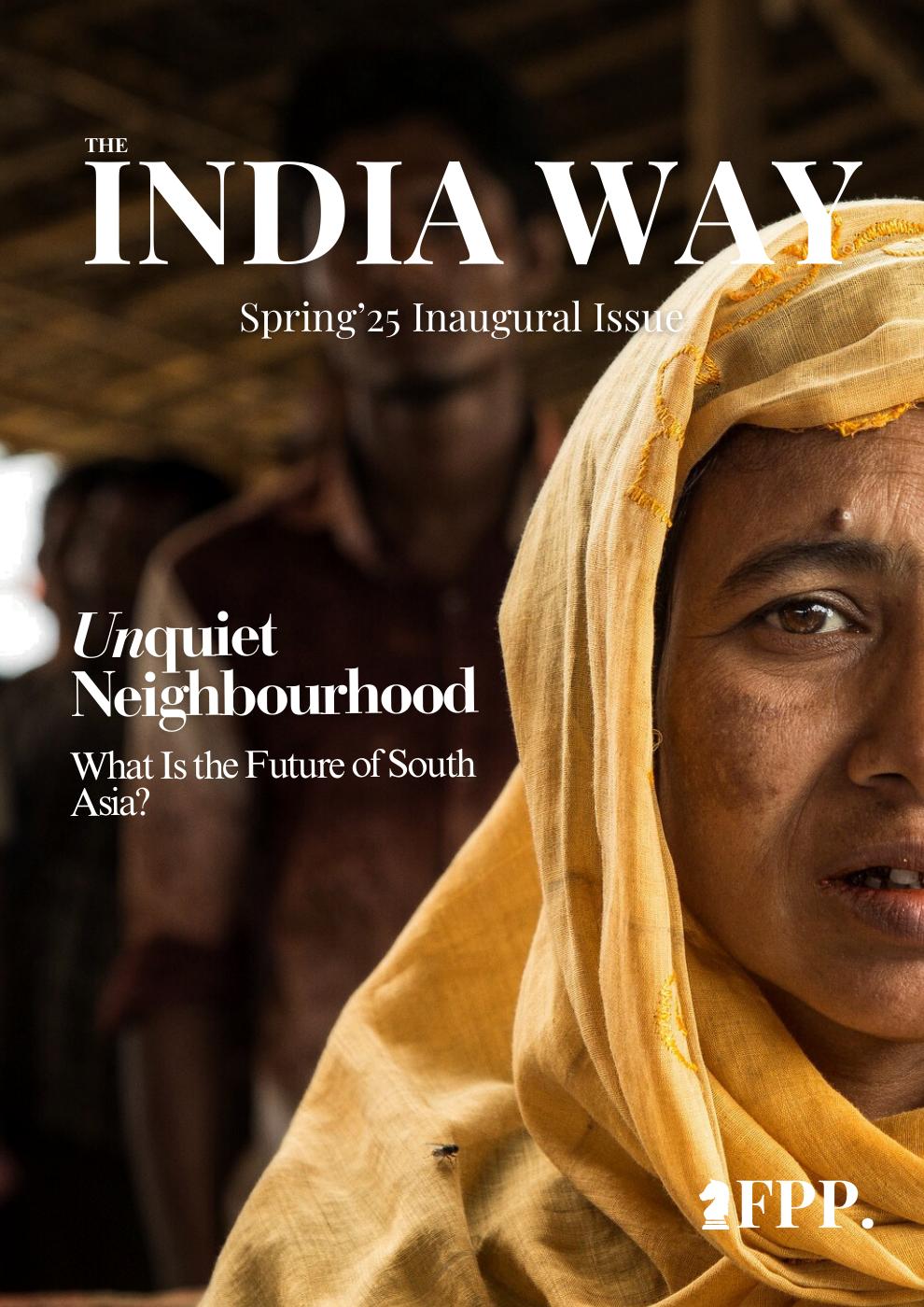
Read Unquiet Neighbourhood: What is the Future of South Asia