The India-Pakistan conflict, spanning over seven decades, has produced casualties that extend far beyond battlefield statistics. While diplomatic discourse focuses on territorial disputes and geopolitical implications, the psychological toll on civilian populations remains critically understudied. This article examines the multidimensional impact of chronic conflict exposure on mental health across both nations, analysing prevalence rates of psychological disorders, intergenerational trauma transmission, and the inadequate healthcare responses to conflict-induced mental health crises. Through systematic analysis of epidemiological data, clinical studies, and socioeconomic indicators, this research reveals that the conflict has created a persistent state of collective trauma affecting millions of lives across the subcontinent.
The partition of British India in 1947 created two sovereign nations locked in perpetual conflict, generating what scholars term a "frozen conflict" characterised by episodic violence, sustained military tension, and deeply entrenched mutual animosity. While academic literature extensively documents the geopolitical, economic, and security dimensions of India-Pakistan relations, the psychological consequences of this enduring conflict remain largely invisible in policy discourse and international relations scholarship. The mental health implications of chronic conflict exposure represent a humanitarian crisis that transcends national boundaries, affecting not only direct victims of violence but entire populations living under the shadow of potential war.
 |
| Illustration by Ajitesh Vishwanath |
Recent epidemiological evidence suggests that prolonged exposure to conflict-related stressors produces measurable increases in psychiatric morbidity, including post-traumatic stress disorder (PTSD), depression, anxiety disorders, and substance abuse. The India-Pakistan conflict presents a unique case study for examining these phenomena due to its duration, intensity, and the demographic scale of affected populations. With over 1.5 billion people living in the region, even modest increases in mental health prevalence rates translate into millions of affected individuals, creating substantial public health challenges for both nations.
This analysis employs a multidimensional framework to examine how chronic conflict exposure manifests in psychological distress across different demographic groups, geographic regions, and socioeconomic strata. By integrating epidemiological data with qualitative research findings and policy analysis, this article argues that the mental health consequences of the India-Pakistan conflict constitute a critical yet neglected dimension of regional security that demands immediate attention from policymakers, healthcare systems, and international organisations.
Historical Context and Psychological Framework
The psychological impact of the India-Pakistan conflict cannot be understood without examining its historical foundations and the manner in which traumatic events become embedded in collective memory. The partition of 1947 resulted in approximately 14 million displaced persons and between 200,000 to 2 million deaths, creating what historians describe as one of the largest forced migrations in human history. This foundational trauma established patterns of intergroup hostility and victimisation narratives that continue to influence contemporary psychological responses to conflict.
Psychological research on conflict exposure identifies several mechanisms through which political violence affects mental health. Direct exposure involves personal experience of violence, displacement, or loss of family members. Indirect exposure encompasses witnessing violence, living in conflict zones, or experiencing chronic fear of attack. Vicarious exposure occurs through media consumption, social networks, and cultural transmission of trauma narratives. The India-Pakistan conflict exemplifies all three exposure types, creating a complex psychological landscape where historical grievances, contemporary tensions, and future anxieties converge.
The concept of intergenerational trauma provides a crucial framework for understanding how conflict-related psychological distress persists across generations. Research on Holocaust survivors and their descendants demonstrates that trauma can be transmitted through multiple pathways, including epigenetic mechanisms, attachment disruptions, and narrative transmission. Similar patterns emerge in populations affected by chronic political conflicts, where successive generations inherit both the psychological scars and defensive adaptations of their predecessors.
Epidemiological Evidence and Prevalence Rates
Systematic examination of mental health data from India and Pakistan reveals elevated rates of psychological disorders in conflict-affected regions compared to national averages. A comprehensive meta-analysis of studies conducted between 2000–2020 indicates that populations in Kashmir, Punjab, and the border districts of both countries exhibit significantly higher prevalence rates of PTSD, depression, and anxiety disorders compared to control populations.
Socioeconomic factors significantly mediate the relationship between conflict exposure and mental health outcomes. Low-income populations demonstrate higher vulnerability to psychological distress due to limited access to healthcare, inadequate social support systems, and increased exposure to violence and displacement. Rural communities in border areas face particular challenges, as agricultural livelihoods become disrupted by military operations and cross-border tensions, creating cycles of economic stress and psychological distress.
Religious and ethnic minorities experience additional layers of psychological burden related to identity-based persecution and discrimination. The Ahmadiyya community in Pakistan, Kashmiri Pandits in India, and various other minority groups report elevated rates of anxiety and depression associated with targeted violence and social marginalisation. These communities often lack adequate support systems and face barriers to accessing mental healthcare, compounding their psychological vulnerability.
Demographic and Socioeconomic Dimensions
The mental health impact of the India-Pakistan conflict varies significantly across demographic groups, with women, children, elderly populations, and marginalized communities experiencing disproportionate effects. Gender-differentiated analysis reveals that women in conflict-affected areas exhibit higher rates of depression and anxiety disorders, often compounded by experiences of domestic violence and economic insecurity.
Children represent a particularly vulnerable population, with exposure to conflict-related violence during critical developmental periods producing lasting psychological consequences. The National Institute of Mental Health and Neurosciences (2017) found that children in Kashmir exhibit delayed cognitive development, behavioural problems, and academic difficulties at rates significantly higher than national averages. School attendance rates in conflict zones remain chronically low, partly due to security concerns but also reflecting trauma-related learning difficulties and family disruption.
Socioeconomic factors significantly mediate the relationship between conflict exposure and mental health outcomes. Low-income populations demonstrate higher vulnerability to psychological distress due to limited access to healthcare, inadequate social support systems, and increased exposure to violence and displacement. Rural communities in border areas face particular challenges, as agricultural livelihoods become disrupted by military operations and cross-border tensions, creating cycles of economic stress and psychological distress.
Religious and ethnic minorities experience additional layers of psychological burden related to identity-based persecution and discrimination. The Ahmadiyya community in Pakistan, Kashmiri Pandits in India, and various other minority groups report elevated rates of anxiety and depression associated with targeted violence and social marginalisation.
Healthcare System Responses and Inadequacies
Both India and Pakistan demonstrate significant deficiencies in mental healthcare infrastructure, particularly in conflict-affected regions where needs are greatest. The World Health Organization estimates that low and middle-income countries require approximately 1 mental health professional per 1,000 population to adequately address psychiatric morbidity, yet both nations fall far below this threshold.
India's mental health workforce consists of approximately 0.3 psychiatrists per 100,000 population, with even lower ratios in conflict-affected states. Jammu and Kashmir, despite having the highest prevalence of mental health disorders, maintains only 0.1 psychiatrists per 100,000 residents, creating massive treatment gaps. The situation in Pakistan proves similarly inadequate, with 0.2 psychiatrists per 100,000 population and minimal presence in border regions.
Traditional healing systems and community-based interventions partially compensate for formal healthcare deficiencies, but these approaches often lack evidence-based treatment protocols and quality assurance mechanisms. Religious institutions and community organisations provide crucial psychosocial support, yet they remain inadequately integrated with formal healthcare systems and lack training in trauma-informed care approaches.
The stigma surrounding mental health in South Asian societies creates additional barriers to treatment seeking and service delivery. Cultural beliefs about mental illness, family honour concerns, and fear of discrimination prevent many individuals from accessing available services. This stigma proves particularly pronounced in conflict-affected communities, where seeking mental health treatment may be perceived as weakness or disloyalty to community struggles.
Economic Dimensions
The economic consequences of conflict-related mental health problems extend far beyond healthcare costs, encompassing reduced productivity, increased disability, and intergenerational transmission of poverty. The World Bank in 2016 estimated that mental health disorders reduce GDP by 3–4% annually in low and middle-income countries, with conflict-affected regions experiencing even higher economic losses.
Longitudinal studies in Kashmir indicate that households affected by mental health problems experience 23% lower income levels compared to unaffected families, primarily due to reduced work capacity and increased healthcare expenditures. Agricultural productivity in border regions suffers significantly from conflict-related psychological distress, as farmers experience difficulty concentrating, making decisions, and maintaining consistent work patterns. The Punjab Agricultural University in 2018 documented 15–20% reductions in crop yields in areas with high mental health morbidity, translating into substantial economic losses for rural communities already struggling with conflict-related disruptions.
Educational outcomes also demonstrate clear linkages to mental health status, with children from families affected by psychological disorders showing lower academic achievement and higher dropout rates. This pattern perpetuates intergenerational cycles of disadvantage, as reduced educational attainment limits future economic opportunities and social mobility.
Policy Implications and Interventions
Addressing the mental health consequences of the India-Pakistan conflict requires comprehensive policy responses that integrate healthcare system strengthening, community-based interventions, and conflict resolution efforts. The integration of mental health services into primary healthcare represents a crucial first step toward improving access and reducing treatment gaps. The WHO Mental Health Gap Action Programme (mhGAP) offers evidence-based protocols for training non-specialist healthcare workers to identify and treat common mental health disorders. Pilot implementations in conflict-affected regions of both countries demonstrate promising results, with significant improvements in detection and treatment rates.
Community-based psychosocial interventions show particular promise for addressing collective trauma and building resilience. Group therapy approaches, peer support networks, and traditional healing practices can be integrated into comprehensive treatment programs that address both individual and community-level psychological needs. School-based mental health programs represent another critical intervention point, given the high prevalence of psychological problems among children and adolescents in conflict zones.
Regional Cooperation and Peacebuilding
The transnational nature of conflict-related mental health problems creates opportunities for regional cooperation and confidence-building between India and Pakistan. Joint research initiatives, professional exchanges, and coordinated treatment protocols could improve outcomes while building relationships between healthcare professionals across borders.
Several successful examples of health diplomacy exist in other conflict-affected regions, including collaborative programs between Israeli and Palestinian healthcare organisations. Similar initiatives in South Asia could focus on areas of mutual interest such as disaster response, infectious disease control, and mental health service delivery. Such cooperation could generate positive spillover effects for broader conflict resolution efforts.
International organisations and donor agencies play crucial roles in supporting mental health programming in conflict-affected regions. However, funding mechanisms often emphasise short-term emergency responses rather than long-term capacity building and system strengthening. Sustained investment in mental health infrastructure, workforce development, and community-based programs requires multiyear commitments and flexible funding arrangements.
Recommendations & Conclusion
Addressing the mental health consequences of the India-Pakistan conflict requires coordinated action across multiple domains. Healthcare systems in both countries need substantial investment in mental health infrastructure, workforce development, and service delivery mechanisms. This includes expanding psychiatric training programs, establishing community mental health centres, and integrating psychosocial support into existing healthcare services.
Policymakers should prioritise mental health considerations in conflict prevention and resolution efforts, recognising that psychological trauma perpetuates cycles of violence and intergroup hostility. Peace education programs, dialogue initiatives, and cultural exchanges can help address collective trauma while building foundations for sustainable conflict resolution.
Research priorities should include longitudinal studies of trauma transmission, evaluation of culturally adapted interventions, and analysis of the relationship between mental health and conflict dynamics. Cross-border collaborative research could generate valuable insights while building relationships between academic institutions and healthcare professionals.
The mental health consequences of the India-Pakistan conflict thus represent a humanitarian crisis that has remained largely invisible in policy discourse and international relations scholarship. With millions of people affected by chronic exposure to conflict-related stressors, the psychological toll extends far beyond direct victims of violence to encompass entire populations living under the shadow of potential war.
The path forward demands recognition that mental health represents not merely a healthcare issue but a fundamental dimension of human security that affects social cohesion, economic development, and prospects for peace. The opportunity exists for India and Pakistan to transform a shared challenge into a foundation for cooperation and mutual understanding. By addressing the psychological wounds of seven decades of conflict, both nations can build more resilient societies while creating conditions for sustainable peace and prosperity in South Asia.
About the Author: Dr. Shailen Verma
An Assistant Professor of International Relations at Dr. Ram Manohar Lohia Avadh University, Ayodhya, Dr Verma's research focuses on border studies, human security, colonial legacies, and South Asian geopolitics. He earned his Ph.D. from Banaras Hindu University with a thesis on the India-Nepal border, and has held the Linnaeus-Palme Fellowship at Karlstad University, Sweden. Dr. Verma has published widely in UGC-CARE and SCOPUS-indexed journals and presented at international conferences.
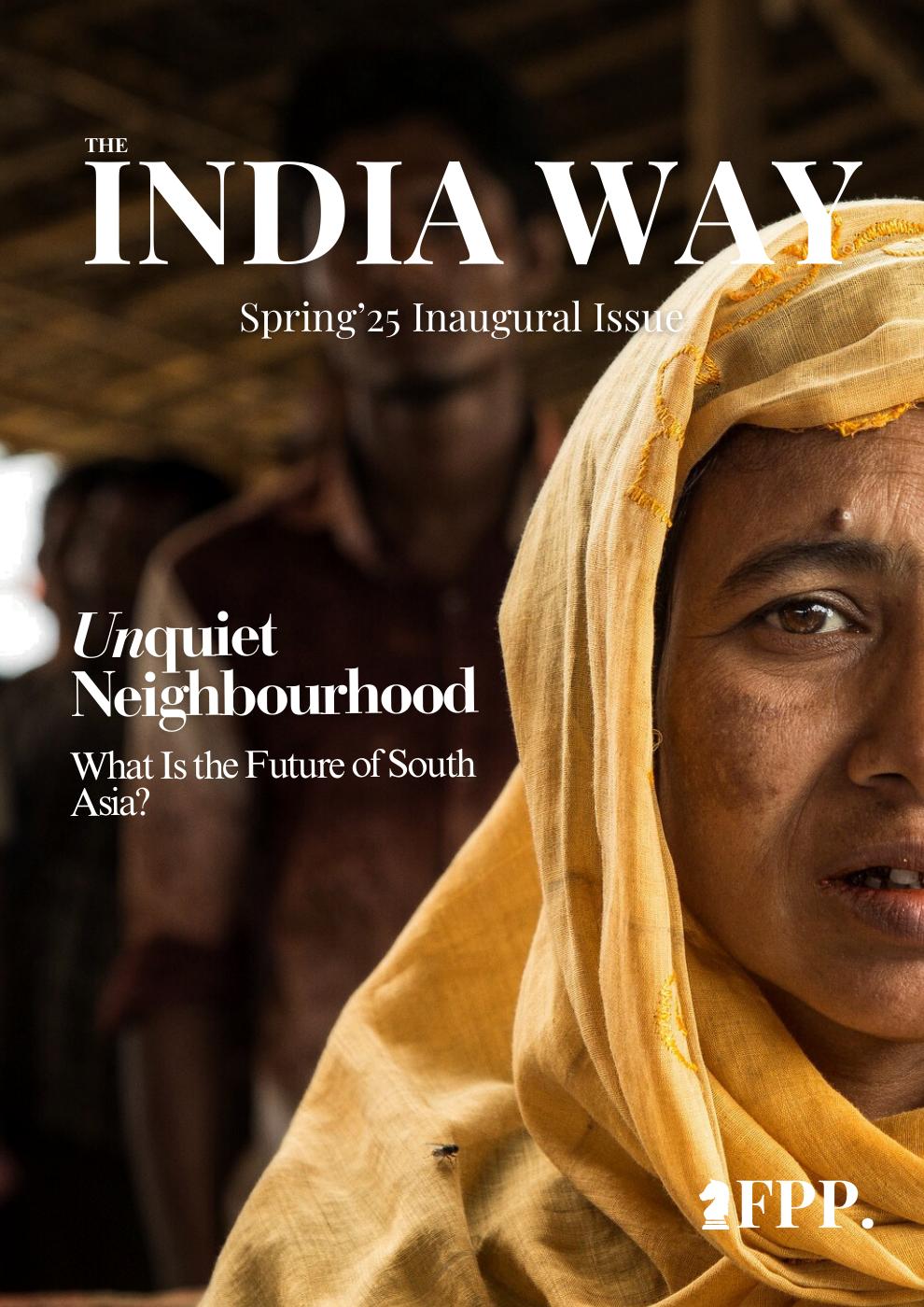
Read Unquiet Neighbourhood: What is the Future of South Asia